
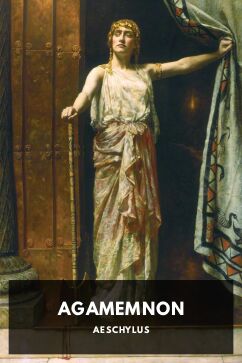
Agamemnon - Aeschylus
Let's set the scene. It's ancient Argos. For ten long years, King Agamemnon has been off fighting the Trojan War. Back home, his wife Clytemnestra rules. She's not just knitting and waiting. She's smart, powerful, and utterly consumed by a private rage. When watchfires finally signal her husband's return, the city celebrates. But Clytemnestra's welcome is a complex, chilling performance.
The Story
Agamemnon comes home victorious, bringing with him a captive prophetess, Cassandra. Clytemnestra greets him with grand, almost over-the-top, speeches. She persuades him to walk into the palace on a luxurious purple tapestry—a gesture that feels wrong, like tempting the gods. Once he's inside, the trap snaps shut. Clytemnestra's vengeance, held for a decade, is unleashed. She kills Agamemnon, and then emerges to justify her act to the horrified public. Her reason? Years before, to get favorable winds for his war fleet, Agamemnon sacrificed their daughter, Iphigenia. For Clytemnestra, this was no act of a king, but of a monster. The play ends not with resolution, but with her standing over the bodies, defiant, while the chorus senses a cycle of violence has just been renewed.
Why You Should Read It
Forget dusty old statues. This play is raw nerve. Aeschylus makes you sit in that awful suspense. You see every step Agamemnon takes toward his doom. Clytemnestra is breathtaking. Is she a wronged mother, a ruthless murderer, or both? The play doesn't give easy answers. It forces you to wrestle with the cost of war, the poison of revenge, and the terrifying power of a silence that has been festering for years. The language is stark and powerful—images of nets, blood, and echoing cries fill the air. It feels less like reading a play and more like witnessing a crime scene.
Final Verdict
This is for anyone who loves a psychological thriller. If you enjoy stories where the most dangerous battles happen in living rooms, not on battlefields, you'll be hooked. It's perfect for fans of complex, morally grey characters you can't easily pin down. Don't be intimidated because it's ancient; the emotions are as fresh and brutal as anything written today. Just be ready—it's a short, sharp shock of a play that stays with you long after you close the book.
You are viewing a work that belongs to the global public domain. Share knowledge freely with the world.
David Jones
3 months agoThis is an essential addition to any academic digital library.
Elizabeth Harris
1 year agoVery satisfied with the depth of this material.
Charles Harris
8 months agoI particularly value the technical accuracy maintained throughout.
Elizabeth Thomas
10 months agoThe citations provided are a goldmine for further academic study.


Nancy Davis
11 months agoRight from the opening paragraph, the evidence-based approach makes it a very credible source of information. Simple, effective, and authoritative – what else could you ask for?