
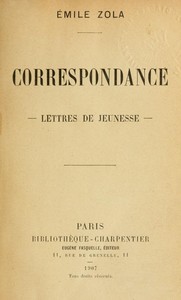
Correspondance: Lettres de jeunesse by Émile Zola
This isn't a novel. There's no plot in the traditional sense. 'Correspondance: Lettres de jeunesse' is a time capsule. It gathers the personal letters Émile Zola wrote between 1858 and 1867, roughly from age 18 to 27. This is the decade before he published 'Thérèse Raquin' and launched the monumental Rougon-Macquart series.
The Story
The 'story' here is the story of becoming. We follow Zola from Aix-en-Provence to Paris, where he arrives with more ambition than money. Through letters to childhood friends like Paul Cézanne and to his family, we see his daily life: scrambling for clerical jobs he hates, facing brutal poverty, and nursing literary plans. We witness fiery debates about art with his circle (the future Impressionists!), his fierce loyalty, and his moments of crushing self-doubt. The central thread is his unwavering, almost obsessive, drive to write. These pages show the grind, the hope, and the raw material that would later be refined into his great novels.
Why You Should Read It
Reading these letters strips away the statue and shows you the man. The Zola here is not yet the confident social critic. He's funny, vulnerable, pretentious at times, and deeply human. You feel his hunger—both for food and for recognition. What struck me most was how relatable his struggles are. The anxiety about the future, the passionate defense of his ideas, the need to convince his doubting mother that his artistic path is valid—it all feels very modern. It makes his later achievements seem even more remarkable. You don't just learn about his influences; you see him actively forming his opinions on realism, politics, and society in real time.
Final Verdict
This book is perfect for Zola fans who want to know the man behind the masterpieces. It's also great for anyone interested in the creative process or in 19th-century Parisian artistic life. If you enjoy biographies or personal diaries, you'll love this direct-from-the-source version. It's not a light beach read, but it's a deeply rewarding one. You come away feeling like you've had a long, intimate conversation with a young artist on the brink of everything.
There are no legal restrictions on this material. It is available for public use and education.
Barbara Harris
1 year agoThe layout is very easy on the eyes.
Donald Clark
1 year agoThis book was worth my time since the atmosphere created is totally immersive. Thanks for sharing this review.