
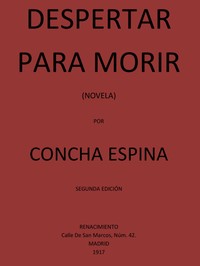
Despertar Para Morir (Novela) by Concha Espina
Concha Espina's Despertar Para Morir is a quiet storm of a novel. Published in 1924, it feels remarkably modern in its focus on a woman's inner world.
The Story
The plot is deceptively simple. Inés, a woman from a respectable family, recovers from a serious illness. But instead of joy, her return to health brings a profound and disturbing certainty: she must die. This isn't a suicidal impulse in the way we might think of it today; it's presented as a deep, almost spiritual knowledge of her own fate. The rest of the novel watches as Inés moves through her daily life—interacting with her husband, her children, her friends—all while carrying this heavy, secret truth. The tension doesn't come from external villains or dramatic events, but from the growing chasm between her internal reality and the external world that expects her to simply be a wife and mother. We're left wondering: will this conviction consume her, or will life, in its messy way, intervene?
Why You Should Read It
What blew me away was how Espina makes Inés's internal struggle feel so tangible. You don't just read about her dilemma; you feel the weight of it in every polite conversation and every domestic duty. Espina was writing in early 20th-century Spain, a time of huge social change, and you can feel that tension in the pages. Inés's 'awakening' is a powerful metaphor. Is it an awakening to a tragic destiny, or is it an awakening to her own trapped existence within strict social roles? The book doesn't give easy answers. It's a masterclass in psychological realism. The prose is lyrical but never flowery, and it builds a mood of quiet, relentless suspense that I found completely absorbing.
Final Verdict
This book is perfect for readers who love character-driven stories that explore the big questions of life, fate, and identity. If you enjoyed the interior focus of novels by Virginia Woolf or the subtle social critiques in Kate Chopin's work, you'll find a kindred spirit in Concha Espina. It's also a fantastic pick for anyone interested in rediscovering brilliant women writers from history whose work still feels fresh. Fair warning: it's not a fast-paced thriller. It's a slow, deep, and haunting look into a soul in crisis, and it's absolutely worth your time.
This masterpiece is free from copyright limitations. It serves as a testament to our shared literary heritage.
Anthony Davis
1 year agoI didn't expect much, but the narrative structure is incredibly compelling. I learned so much from this.




Sarah Scott
9 months agoFrom the very first page, the narrative structure is incredibly compelling. One of the best books I've read this year.