
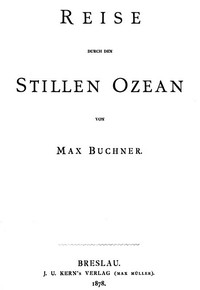
Reise durch den Stillen Ozean by Max Buchner
Max Buchner was a German ethnologist and doctor who, in the late 1870s, embarked on a scientific expedition to the South Pacific. 'Reise durch den Stillen Ozean' (Journey Through the Pacific Ocean) is his personal account, written as a series of diary entries and letters. It's not a novel with a neat plot, but a real-time record of confusion, discovery, and endurance.
The Story
The book follows Buchner's voyage from Europe to places like Hawaii, Samoa, and various islands in Micronesia and Melanesia. We travel with him as he lands on shores controlled by competing colonial powers—Germany, Britain, the US—and tries to navigate their petty officials. He sets up makeshift clinics, attempts ethnographic observations, and collects artifacts, all while battling tropical diseases that leave him weak and frustrated. The 'story' is in the daily grind: bargaining for food, trying to communicate without a common language, observing cultural practices he doesn't understand, and always feeling like an outsider. His mission is constantly undermined by practical realities and his own physical limits.
Why You Should Read It
This book grabbed me because of its brutal honesty. Buchner doesn't cast himself as a hero. He's often irritable, prejudiced, and openly baffled. Reading his thoughts is like having a direct line to the 19th-century European mind—flaws and all. You see the birth of anthropology through messy, on-the-ground trial and error. Beyond the history, there's a powerful human element. His descriptions of landscapes and sea voyages are vivid and immersive. You feel the claustrophobia of the ship, the awe of a first glimpse of a volcanic island, and the profound loneliness of being sick and far from home. It’s a reminder that exploration was mostly uncomfortable, tedious, and deeply personal.
Final Verdict
Perfect for readers who love real adventure stories without the gloss, and for anyone interested in the raw, unromantic side of 19th-century exploration and cultural contact. It's not a fast-paced tale, but a slow-burn character study of the explorer himself. If you enjoy primary sources that let you read between the lines and draw your own conclusions about history, you'll find this fascinating. Just be ready for some outdated attitudes—it's all part of the historical package.
This digital edition is based on a public domain text. Feel free to use it for personal or commercial purposes.
Ava Jones
1 year agoVery helpful, thanks.
Deborah Miller
2 years agoAfter finishing this book, the depth of research presented here is truly commendable. Thanks for sharing this review.
John Jackson
2 years agoSurprisingly enough, the storytelling feels authentic and emotionally grounded. I will read more from this author.
George Allen
5 months agoBeautifully written.





Mary White
1 year agoSimply put, the arguments are well-supported by credible references. A valuable addition to my collection.