
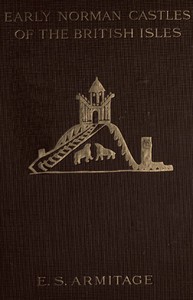
The Early Norman Castles of the British Isles. by Ella Sophia Armitage
Let's be honest, the title sounds like a dry academic text. But The Early Norman Castles of the British Isles is actually a brilliant piece of historical argument. Ella Armitage isn't just listing castles; she's solving a mystery that had puzzled historians for years.
The Story
Armitage lays out a simple but revolutionary idea. When William the Conqueror won in 1066, he didn't have time to build fancy stone castles everywhere. His army was small, the land was hostile, and he needed to secure control fast. So, she argues, they built 'motte and bailey' castles: a large mound of earth (the motte) with a wooden tower on top, next to a fenced yard (the bailey). These could be thrown up in weeks using forced local labor. The stone castles we know and love came later, as symbols of permanent power. Armitage walks us through the evidence, from the Domesday Book entries to the physical shapes of castle mounds, building her case piece by piece against the accepted wisdom that stone came first.
Why You Should Read It
What's amazing is feeling Armitage's passion and intellect leap off the page, even though she wrote this in 1912. You're rooting for her as she carefully dismantles old theories. She wasn't a university professor but a dedicated independent scholar, which makes her achievement even more impressive. The book changes how you see the landscape. It transforms those peaceful, grassy hills in town parks from mere bumps in the earth into the brutal, efficient tools of military occupation they once were. It's a lesson in looking past the obvious ruin to see the clever, pragmatic reality underneath.
Final Verdict
This isn't a casual weekend read, but it's far more accessible than you'd think. It's perfect for anyone who loves real-world historical detective work, for fans of the Norman period who want to go beyond the basic facts, and for anyone who enjoys seeing a sharp, underrated mind get a long-overdue victory. If you've ever visited a castle and wondered 'how did they actually do this?', Armitage has the startling, ground-breaking answer.
This book is widely considered to be in the public domain. Preserving history for future generations.
Susan Perez
6 months agoAs a long-time follower of this subject matter, the author doesn't just scratch the surface but goes into meaningful detail. The price-to-value ratio here is simply unbeatable.
Joshua Williams
7 months agoAfter hearing about this author multiple times, it creates a vivid world that you simply do not want to leave. Worth every second.
Andrew Walker
1 year agoI came across this while browsing and the character development leaves a lasting impact. Exceeded all my expectations.
Kimberly Taylor
6 months agoGreat reference material for my coursework.




Karen Martinez
5 months agoAs someone working in this industry, I found the insights very accurate.