About 361 minutes
The Wouldbegoods — Themes and Context
Sea Voyages Pirate Adventures
83,018 recorded words. 13 minutes difference from this book's estimate.
View Gutenberg source #32466
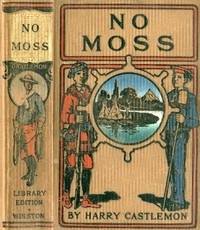
This digital edition of No Moss; Or, The Career of a Rolling Stone — Themes and Context is described by source-level measurements including 85,907 words, 6 hr 14 min estimated reading time, and 8 detected text sections.
The text analysis averages about 20.1 words per sentence, while the detected sections provide another way to judge how the source is divided.
Project Gutenberg metadata also associates the work with “Conduct of life -- Juvenile fiction,” connecting these edition facts with the source record’s subject description.
Explore this collection
These alternatives are selected using recorded categories and estimated reading time.
About 361 minutes
Sea Voyages Pirate Adventures
83,018 recorded words. 13 minutes difference from this book's estimate.
View Gutenberg source #32466About 396 minutes
Sea Voyages Pirate Adventures
91,037 recorded words. 22 minutes difference from this book's estimate.
View Gutenberg source #21692About 343 minutes
Sea Voyages Pirate Adventures
78,720 recorded words. 31 minutes difference from this book's estimate.
View Gutenberg source #21239Search stored excerpts and compare books → Choose by your preferences →
Choices use stored catalog measurements. Estimates vary with reading speed. A shared category is a catalog label, not a claim that two books have the same argument or literary quality.
Search reads excerpt text stored with this catalog and links to its associated Gutenberg record. The connection is stored in the site database; this tool does not recheck that every excerpt is word-for-word identical to that external record. Excerpt search does not cover every chapter and does not verify historical publication dates.
Catalog snapshot checked: 2026-09-25. Coverage: 92 public books, 92 available source excerpts.
Read the complete public-domain text at its original source.
Read on Project GutenbergThe novel opens aboard the Storm King, a training vessel for boys, where the ringing of four bells signals a transition from study to recreation. This precise temporal marker—the second dog-watch—establishes a rhythm of regulated freedom that governs the early chapters. The crew tumbles up the hatchway with guitars, checkerboards, and single-sticks, a catalogue of leisure that immediately signals the book’s interest in structured play. Yet the scene is not merely idyllic; the presence of an executive officer and the formal report of the messenger-boy remind readers that this is a world of hierarchy and duty, where even relaxation occurs under supervision.
The Storm King functions as a floating school, its routines punctuated by bells and commands. The opening chapter, “Fire Quarters,” hints at emergency drills, but the excerpts show that the vessel’s discipline is constantly tested. When the crew of the jolly-boat leaps over the rail without securing the painter, the mistake—born of excitement—leads to an unexpected bath. This small failure of procedure is typical: the boys are competent but impulsive, and their adventures often begin with a lapse in seamanship. The ship itself becomes a stage for rehearsing order, while the islands and schooners they encounter offer a freer, more dangerous arena.
The Crusoe men, named after Defoe’s castaway, inhabit a world apart from the Storm King. Their leader, the governor, speaks in a colloquial drawl (“Let go Tommy’s collar, spooney”) that contrasts with the officers’ more formal tones. The island setting allows for improvised weapons—handspikes, boat-hooks, oars—and a code of honor that prizes physical courage over gentlemanly conduct. Yet the boundary between the two groups is porous: the students invade the island, and the Crusoe men board the schooner. Movement between ship and shore drives the plot, each location testing different skills.
Struggles over prisoners, handspike duels, and water fights recur across the excerpts. Tom’s capture involves a “death grip” on the rail, a throw headfirst into the water, and a furious resistance while being pulled toward a boat. The fight on the Sweepstakes is depicted as a series of grabs, throws, and near-misses. These scenes emphasize bodily strength and quick reflexes over strategy. The narrator notes that the Crusoe men initially mistake the students for cowards (“spooneys”) but learn that “good clothes, strong muscles, and reckless bravery go together sometimes.” The physical contests thus serve as proofs of character.
Water is not merely a backdrop but an active element in the conflict. Characters are thrown overboard, dive to escape, and fight while swimming. The jolly-boat drifts away because its painter was not made fast; the skiff is manned in haste; and the midshipman springs over the rail to avoid a boat-hook. Immersion in the harbor is treated as an inconvenience rather than a danger—“an unexpected bath in the harbor was no new thing to them.” This casual attitude toward water hazards reflects the boys’ familiarity with the sea and prepares readers for further aquatic escapades.
Readers attentive to the novel’s structure will notice how each chapter alternates between the regulated world of the Storm King and the improvisational chaos of the Crusoe men’s island. The recurring images of handspikes, boat-hooks, and water rescues create a consistent vocabulary of action. Because the excerpts cover only the first half of the book, it remains to be seen whether this pattern persists or gives way to new settings and challenges.
Years ago, shelving old adventure tales, I noticed how No Moss keeps its hero forever bobbing between the discipline of deck and the wild freedom of shore. It reminded me of another old friend, The Three Admirals — Inside the Classic, which shares that same restless salt-air pulse. There’s a quiet kinship there, both stories humming along like tide against hull.
Build a private reading journal entry for this title.