About 374 minutes
No Moss; Or, The Career of a Rolling Stone — Themes and Context
Sea Voyages Pirate Adventures
85,907 recorded words. 13 minutes difference from this book's estimate.
View Gutenberg source #33226
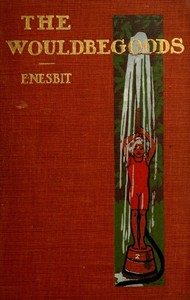
For The Wouldbegoods — Themes and Context, the stored edition analysis reports 83,018 words, 6 hr 1 min estimated reading time, and 10 detected text sections.
The text analysis averages about 16.4 words per sentence, while the detected sections provide another way to judge how the source is divided.
Project Gutenberg metadata also associates the work with “Adventure stories,” connecting these edition facts with the source record’s subject description.
Explore this collection
These alternatives are selected using recorded categories and estimated reading time.
About 374 minutes
Sea Voyages Pirate Adventures
85,907 recorded words. 13 minutes difference from this book's estimate.
View Gutenberg source #33226About 343 minutes
Sea Voyages Pirate Adventures
78,720 recorded words. 18 minutes difference from this book's estimate.
View Gutenberg source #21239About 396 minutes
Sea Voyages Pirate Adventures
91,037 recorded words. 35 minutes difference from this book's estimate.
View Gutenberg source #21692Search stored excerpts and compare books → Choose by your preferences →
Choices use stored catalog measurements. Estimates vary with reading speed. A shared category is a catalog label, not a claim that two books have the same argument or literary quality.
Search reads excerpt text stored with this catalog and links to its associated Gutenberg record. The connection is stored in the site database; this tool does not recheck that every excerpt is word-for-word identical to that external record. Excerpt search does not cover every chapter and does not verify historical publication dates.
Catalog snapshot checked: 2026-09-25. Coverage: 92 public books, 92 available source excerpts.
Read the complete public-domain text at its original source.
Read on Project GutenbergThe narrator of The Wouldbegoods is Oswald Bastable, and his voice is the book's engine. From the opening line—'Children are like jam: all very well in the proper place, but you can't stand them all over the shop'—Nesbit establishes a tone of wry, affectionate mockery that never falters. Oswald reports adult criticism with injured dignity, yet his own narration undercuts that dignity at every turn. When his father says 'I am ashamed of them, sir!' Oswald describes the feeling as 'like having swallowed a hard-boiled egg whole'—a simile that is both precise and childishly physical. This double perspective, where the reader sees more than Oswald admits, is the book's central comic device.
Oswald speaks in a self-important, slightly archaic style that mimics the adventure stories he admires. He refers to himself in the third person, announces that 'as the eldest, he was the representative of the family,' and uses phrases like 'your lot is indeed a dark and terrible one.' Yet his grandiosity is constantly punctured by the mundane details he includes. When the miller's wife offers 'Eiffel Tower lemonade and Marie biscuits' instead of the storybook 'cowslip wine and home-made cake,' Oswald notes the discrepancy without irony—but the reader feels it. His descriptions of fishing gear ('a handsome handful of meal-worms, which Oswald put loose in his pocket') combine formality with practical absurdity. The voice is consistent: a boy trying to sound like a hero, but too honest to leave out the embarrassing bits.
The setting is not just background but an active element in the children's schemes. Nesbit renders the English countryside with precise, sensory detail: the mill with its 'rustling, soft noise' of sliding corn, the 'great, round dripping giant' of the water-wheel, the 'cloverfield, and then a cornfield, and then another lane.' These descriptions are filtered through Oswald's practical enthusiasm—he notes that the miller 'did the thing thoroughly' by cutting ash saplings for fishing rods. The country is presented as a place of possibility, where adults are friendlier ('like a pound of butter on one loaf is thicker than on a dozen') and adventures await. Yet the children's interactions with this landscape are consistently clumsy: they fish with borrowed rods, get damp, and cause chaos. The idyllic setting contrasts with their disastrous good intentions.
Nesbit's humor relies heavily on understatement and the gap between expectation and reality. When the children are scolded, Oswald says 'we felt in our chests just as if we had swallowed a hard-boiled egg whole'—a deflating image for a moment of high drama. The miller's wife, instead of offering rustic hospitality, gives 'Eiffel Tower lemonade' (a brand-name soda) and 'Marie biscuits' (plain cookies). The children's fishing triumph—'eight roach, six dace, three eels, seven perch, and a young pike'—is undercut by the miller's request to release the pike because 'he'll live to bite another day.' Even the book's title, The Wouldbegoods, announces the theme of failed aspiration. Oswald's narration never acknowledges the comedy directly; he reports events with straight-faced earnestness, leaving the reader to supply the ironic interpretation.
The Bastable children operate by a strict, if unspoken, code. Oswald insists on truthfulness in his narration, even when it makes him look foolish. He admits that 'we could not think it ungentlemanly of him to say we were like jam' because 'jam is very nice indeed—only not on furniture.' When the miller asks them to return the young pike, 'of course we did'—the phrase implies an automatic adherence to sportsmanlike conduct. Yet this code coexists with petty squabbles: 'Even Dicky and H. O. forgot the affair of honor that had taken place in the morning.' The children are simultaneously principled and childish. Oswald's role as 'representative of the family' is a burden he takes seriously, but his judgments are those of a boy, not an adult. This tension between aspiration and reality drives the narrative.
Nesbit distinguishes the children through their speech patterns. Oswald's narration is formal and self-important; Alice is more practical and empathetic; Noël is poetic ('the great water-wheel working on slow and sure, like some great, round dripping giant'). The adults speak in a different register: the Indian uncle's blunt 'Children are like jam' contrasts with the miller's friendly, colloquial 'He'll live to bite another day.' The miller's wife speaks of 'her lodgers and about her relations in London'—a detail that suggests her social aspirations. Nesbit uses dialogue to reveal character without explicit commentary. When the miller asks 'if they fished' and the children reply 'Yes' immediately, the brevity conveys their eagerness. The book's humor often arises from the gap between what characters say and what they mean, or between their words and their actions.
Readers approaching The Wouldbegoods should attend closely to Oswald's voice, which carries the entire narrative. The book rewards attention to its small, precise details—the brand of lemonade, the weight of a fish, the texture of a simile. Nesbit never explains her jokes; she trusts the reader to catch the irony. The result is a comedy of manners disguised as a children's adventure, where the real drama lies not in the events but in the gap between how the children see themselves and how they actually behave.
I remember how the Bastable children’s noble intentions kept unraveling so gently, each disaster wrapped in young Oswald’s matter-of-fact pride. That same quiet tension—wanting to be good, yet tripping over your own earnestness—stayed with me later, oddly, when I came across Aunt Hannah and Seth — Edition Insights. It felt less like a story and more like a familiar sigh from someone who’d watched that struggle before.
Answer a few questions and save a private reflection on this device.