About 228 minutes
A Christmas Child: A Sketch of a Boy-Life — Inside the Classic
Fantasy Juvenile Worlds
52,337 recorded words. 2 minutes difference from this book's estimate.
View Gutenberg source #34045
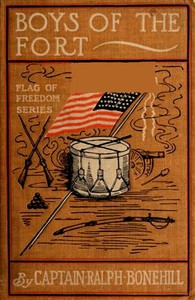
For Boys of The Fort; Or, A Young Captain's Pluck — Context and Discussion, the stored edition analysis reports 52,799 words, 3 hr 50 min estimated reading time, and 6 detected text sections.
The text analysis averages about 13.3 words per sentence, while the detected sections provide another way to judge how the source is divided.
Project Gutenberg metadata also associates the work with “Indians of North America -- Juvenile fiction,” connecting these edition facts with the source record’s subject description.
Explore this collection
These alternatives are selected using recorded categories and estimated reading time.
About 228 minutes
Fantasy Juvenile Worlds
52,337 recorded words. 2 minutes difference from this book's estimate.
View Gutenberg source #34045About 227 minutes
Fantasy Juvenile Worlds
52,199 recorded words. 3 minutes difference from this book's estimate.
View Gutenberg source #32556About 225 minutes
Fantasy Juvenile Worlds
51,721 recorded words. 5 minutes difference from this book's estimate.
View Gutenberg source #24698Search stored excerpts and compare books → Choose by your preferences →
Choices use stored catalog measurements. Estimates vary with reading speed. A shared category is a catalog label, not a claim that two books have the same argument or literary quality.
Search reads excerpt text stored with this catalog and links to its associated Gutenberg record. The connection is stored in the site database; this tool does not recheck that every excerpt is word-for-word identical to that external record. Excerpt search does not cover every chapter and does not verify historical publication dates.
Catalog snapshot checked: 2026-09-25. Coverage: 92 public books, 92 available source excerpts.
Read the complete public-domain text at its original source.
Read on Project GutenbergFrom its opening chapters, Boys of the Fort establishes a narrative voice that is brisk, declarative, and oriented toward action. Sentences are short and direct: “Joe's heart sank within him,” “That was a close shave,” “A dash into the darkness might save us.” The prose rarely lingers on description; instead, it moves quickly from one event to the next, mirroring the urgency of the characters’ situation. Dialogue carries much of the plot, often in clipped exchanges that reveal anxiety or resolve without extended reflection. This economical style keeps the focus on external events—captures, searches, and narrow escapes—rather than internal states.
The narrator’s voice is consistently matter-of-fact, even during moments of high tension. When the boys are captured, the text reports: “Still guarding the boys, the desperadoes took their guns and also a pistol the young captain had loaned his brother.” The tone remains flat, almost reportorial, which heightens the sense of danger by refusing to dramatize it. This restraint extends to the characters’ speech: “Are you going to take us to Captain Moore?” asked Darry. “Perhaps,” answers Gilroy. The brevity of the reply underscores the captors’ control and the prisoners’ vulnerability. Throughout the excerpts, the rhythm of the prose—short declarative sentences punctuated by occasional longer ones—creates a staccato effect that keeps the narrative moving forward without pause.
The story’s pacing is built around rapid alternations between captivity and attempted escape, with each scene compressed into a few paragraphs. A typical sequence: the boys are captured, brought to a cave, warned not to talk, then left under guard. Within a page, a new development—a dropped message, a search for the paper, a change of guard—shifts the situation. The hurricane chapter (XV) and the skirmish (XXIV) suggest that action sequences are similarly compressed, though the excerpts do not include them. This structure keeps the reader in a state of near-constant uncertainty, as no lull lasts long. The narrative rarely pauses for reflection; even when the characters “wondered if the desperadoes would remain about the cave all night,” the thought is immediately followed by a new event: “The other party … had not yet returned.”
Throughout the excerpts, characters are repeatedly watched, searched, or hidden. The boys “were watched so closely they could do nothing”; Gilroy “lit a torch and went over the whole cave carefully” looking for a dropped paper; the prisoners “ate sparingly, fearing the food might be drugged.” The motif extends to the landscape: caves, forests, and the fort itself become spaces of concealment or exposure. The old scout Benson hides in “the crotch of a tree” to observe the desperadoes. This pattern of watching and being watched reinforces the power imbalance between captors and captives, and it gives the narrative a tense, claustrophobic quality even when the setting is open country. The repeated emphasis on papers, messages, and signals (chapters XXVII–XXX) further ties the plot to the act of reading and interpreting hidden information.
Readers attentive to narrative craft will notice how Stratemeyer uses a plain, unadorned style to generate suspense without relying on elaborate description. The story’s momentum comes from its tight scene construction and the constant threat of discovery. Pay attention to how the author varies sentence length during moments of crisis—short bursts for action, slightly longer lines for planning—and how the dialogue often carries the burden of advancing the plot. These choices give Boys of the Fort a distinctive rhythm that rewards close reading.
There’s something about the old Stratemeyer cadence—short, watchful sentences, the constant shadow of concealment—that lingers long after the last page. It makes me think of Dick o' the Fens: A Tale of the Great East Swamp — Background and Themes, where that same quiet vigilance feels less like soldiering and more like the slow, patient rhythm of the marsh itself. Both left me wistful for a pluckier, more alert version of myself.
Save your reaction, strongest insight, and memorable passage.