About 227 minutes
Dorothy's Tour — Text and Context
Fantasy Juvenile Worlds
52,199 recorded words. 2 minutes difference from this book's estimate.
View Gutenberg source #32556
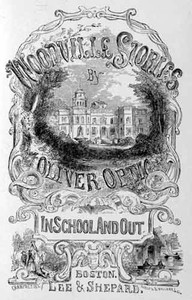
The source record for In School and Out; or, The Conquest of Richard Grant. — Key Ideas to Explore measures this digital text at 51,721 words, 3 hr 45 min estimated reading time, and 6 detected text sections.
The text analysis averages about 16.0 words per sentence, while the detected sections provide another way to judge how the source is divided.
Project Gutenberg metadata also associates the work with “Boys -- Conduct of life -- Juvenile fiction,” connecting these edition facts with the source record’s subject description.
Explore this collection
These alternatives are selected using recorded categories and estimated reading time.
About 227 minutes
Fantasy Juvenile Worlds
52,199 recorded words. 2 minutes difference from this book's estimate.
View Gutenberg source #32556About 228 minutes
Fantasy Juvenile Worlds
52,337 recorded words. 3 minutes difference from this book's estimate.
View Gutenberg source #34045About 230 minutes
Fantasy Juvenile Worlds
52,799 recorded words. 5 minutes difference from this book's estimate.
View Gutenberg source #32057Search stored excerpts and compare books → Choose by your preferences →
Choices use stored catalog measurements. Estimates vary with reading speed. A shared category is a catalog label, not a claim that two books have the same argument or literary quality.
Search reads excerpt text stored with this catalog and links to its associated Gutenberg record. The connection is stored in the site database; this tool does not recheck that every excerpt is word-for-word identical to that external record. Excerpt search does not cover every chapter and does not verify historical publication dates.
Catalog snapshot checked: 2026-09-25. Coverage: 92 public books, 92 available source excerpts.
Read the complete public-domain text at its original source.
Read on Project GutenbergOliver Optic's In School and Out; or, The Conquest of Richard Grant opens with a preface that frames the story as a moral canvas: Richard is a boy with good qualities but a dangerous inner foe. The narrative immediately establishes a pattern of physical and ethical tension, as seen in the fight with Nevers. Richard's careful preparation for the encounter—"divested himself of all superfluous clothing" and arranged his garments with precision—contrasts with Nevers's nervousness, hinting at a deeper struggle between composure and passion.
The author's voice intrudes directly to judge Richard's deception: "Deception, or wilfully misleading another... is, in our opinion, just as culpable a falsehood." This editorial stance, paired with the detailed fight sequences, creates a layered reading experience where action and moral instruction are tightly interwoven.
The excerpted fight scene reveals how Optic uses physical conflict to explore character. Richard's dialogue with Bailey shows a boy negotiating between a father's advice—"never to take an insult"—and a personal aversion to lying. The resolution, "I won't lie about it, any how," is immediately undercut by his evasive answer to Mr. Gault. Optic then pauses the narrative to deliver a direct moral judgment, a technique that recurs throughout the book. Readers should note how the author balances fast-paced action with explicit commentary, often breaking the fourth wall to guide interpretation.
The fight itself is described with clinical precision: the line of scouts, the ring formation, the "attitude of the pugilist." These details ground the moral lesson in concrete, almost instructional prose, reflecting the book's dual identity as entertainment and didactic tool.
The preface introduces the central metaphor of conquest—not of external enemies but of "principle over passion." This internal battle is externalized through Richard's repeated scrapes, each escalating in consequence. The chapter titles in the contents list trace a trajectory from "awful Scrape" to "kindles a Fire," suggesting a pattern of transgression and punishment. However, the excerpts show that Optic is less interested in the scrapes themselves than in Richard's responses: his calculations about truth-telling, his physical composure under pressure, and his gradual acceptance of responsibility.
Readers should attend to the recurring motif of "face the music" and similar phrases that link moral courage to physical endurance. The fight with Nevers is not just a set piece but a laboratory for testing Richard's developing ethics.
Optic's narrative voice is distinctive for its blend of omniscience and moral certainty. He not only describes events but evaluates them, as when he declares Richard's manner "just as culpable a falsehood" as a spoken lie. This direct address creates a peculiar intimacy with the reader, who is positioned as a judge of Richard's actions. Yet the author also withholds full knowledge: the excerpts do not reveal whether Richard ultimately reforms, leaving the "conquest" of the title an open question.
The language is formal and slightly archaic—"divested himself," "equanimity," "towering passion"—which contrasts with the colloquial dialogue of the boys. This stylistic tension mirrors the book's central conflict between youthful impulse and adult discipline. Pay attention to how Optic shifts between these registers to signal moral lessons.
As you read, track how Optic uses physical details—the swelling on Richard's face, the arrangement of his clothing, the line of scouts—to externalize internal moral states. The book rewards attention to its structural patterns: each scrape is followed by a moment of reflection, often interrupted by authorial commentary. Consider whether the narrative's explicit moralizing enhances or complicates the story's suspense. The conquest promised in the title may be less about Richard's final state than about the reader's own judgment of his progress.
Reading about Richard Grant’s quiet battle with his own pride reminded me of summers on my grandfather’s porch, where I first opened It's like this, cat — Story, Setting & Ideas. That book also understood how a boy’s small choices—lying about a scratched fender, hiding a stray—slowly build or break his sense of self. Neither story shouts its lesson. They just sit with you, like old friends, until the truth settles in.
Use these questions to collect your thoughts before moving on.