About 322 minutes
The Girls and I: A Veracious History — Story, Setting & Ideas
Fantasy Juvenile Worlds
73,932 recorded words. 3 minutes difference from this book's estimate.
View Gutenberg source #31007
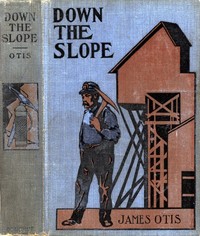
The catalog record for Down the Slope — Themes and Context provides practical reading context through 73,211 words, 5 hr 19 min estimated reading time, and 9 detected text sections.
The text analysis averages about 17.5 words per sentence, while the detected sections provide another way to judge how the source is divided.
Project Gutenberg metadata also associates the work with “Conduct of life -- Juvenile fiction,” connecting these edition facts with the source record’s subject description.
Explore this collection
These alternatives are selected using recorded categories and estimated reading time.
About 322 minutes
Fantasy Juvenile Worlds
73,932 recorded words. 3 minutes difference from this book's estimate.
View Gutenberg source #31007About 325 minutes
Fantasy Juvenile Worlds
74,691 recorded words. 6 minutes difference from this book's estimate.
View Gutenberg source #29693About 326 minutes
Fantasy Juvenile Worlds
74,952 recorded words. 7 minutes difference from this book's estimate.
View Gutenberg source #21697Search stored excerpts and compare books → Choose by your preferences →
Choices use stored catalog measurements. Estimates vary with reading speed. A shared category is a catalog label, not a claim that two books have the same argument or literary quality.
Search reads excerpt text stored with this catalog and links to its associated Gutenberg record. The connection is stored in the site database; this tool does not recheck that every excerpt is word-for-word identical to that external record. Excerpt search does not cover every chapter and does not verify historical publication dates.
Catalog snapshot checked: 2026-09-25. Coverage: 92 public books, 92 available source excerpts.
Read the complete public-domain text at its original source.
Read on Project GutenbergThe opening chapter of Down the Slope introduces the reader to a coal-mining community through a brisk, almost staccato exchange between a newcomer and a seasoned breaker boy. The dialogue is stripped of attribution, relying on quotation marks alone to distinguish speakers—a technique that creates an immediate sense of urgency and impersonality. The newcomer learns that a green hand earns thirty-five cents a day and that debt to the company store can trap a worker indefinitely. This economic reality is delivered in short, blunt lines: “I won’t get into debt.” “Wait a week, and see if you can say the same thing then.” The voice is plain, the sentences clipped, and the setting established without descriptive flourish.
Throughout the excerpts, Otis relies heavily on dialogue to advance the plot and reveal character. In the first chapter, the conversation between the two boys is nearly devoid of narrative tags or physical description; the reader must infer tone and gesture from the words alone. This technique gives the opening a theatrical, almost script-like quality. Later, during the mine collapse, dialogue becomes fragmented and desperate: “They’re coming! They’re coming!” “Who? Who?” The short, repeated phrases convey exhaustion and hope. The shift from the crisp, businesslike exchanges of the early pages to the halting, breathless cries of the trapped miners marks a clear change in narrative pace. Otis uses dialogue not only to tell the story but to modulate its emotional temperature—quick and cool at the surface, slow and raw underground.
The novel’s structure mirrors a physical descent into the mine. The early chapters, as suggested by the table of contents, move rapidly through a series of events: “The Warning,” “In the Shaft,” “The Barrier,” “The Mob.” The prose in these sections is lean, with short paragraphs and frequent scene shifts. But once the characters are trapped, the narrative slows dramatically. The excerpt from the rescue sequence lingers on sensory details—the odor of oil, the tiny flame of the lamp, the listless use of a shovel. Time becomes elastic: “To Fred it seemed as if he had been unconscious for many days.” The sentences grow longer, more cumulative, as the characters wait. This deliberate deceleration forces the reader to experience the suffocating stillness of the mine, a stark contrast to the hurried surface world of mobs and detectives.
The language of Down the Slope is marked by a plainness that reflects the characters’ circumstances. There is little figurative language; instead, the prose relies on concrete nouns and verbs: “breaker,” “shaft,” “shovel,” “doled out.” The miners speak in a vernacular that is direct and unadorned: “Don’t fret, lad, we’re workin’ the best we know how.” The narrator’s voice, too, stays close to the characters’ perspective, rarely rising above their vocabulary. This consistency in register gives the novel a documentary feel. Yet within this flatness, Otis varies sentence rhythm to signal shifts in tension. Short, declarative sentences dominate action scenes: “Sam remained leaning close against the barrier.” Longer, more complex sentences appear during moments of reflection or despair. The result is a narrative that feels both authentic and carefully paced, its language a tool for conveying the weight of economic and physical peril.
Readers attentive to shifts in tempo will find that Down the Slope rewards close attention to its sentence rhythms. The novel’s movement from rapid-fire dialogue to extended, almost static passages of waiting is not accidental; it is a structural choice that reinforces the contrast between the frantic activity above ground and the slow, desperate struggle below. Pay particular attention to how Otis uses paragraph length and dialogue density to signal changes in urgency. The book’s plain style, far from being artless, is a deliberate vehicle for its grim subject matter.
There’s a moment in Down the Slope where the boy’s breath just gives out, and the whole story slows to that hush. I thought of that stillness again while reading Messenger No. 48 — A Reader’s Guide, which lingers on such quiet beats. It’s nice to have someone else notice how those pauses hold the weight.
Save your reaction, strongest insight, and memorable passage.