About 203 minutes
Ruth Fielding Down East; Or, The Hermit of Beach Plum Point — Key Ideas to Explore
Fantasy Juvenile Worlds
46,592 recorded words. 0 minutes difference from this book's estimate.
View Gutenberg source #23116
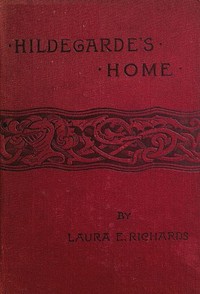
For Hildegarde's Home — Context and Discussion, the stored edition analysis reports 46,622 words, 3 hr 23 min estimated reading time, and 7 detected text sections.
The text analysis averages about 13.0 words per sentence, while the detected sections provide another way to judge how the source is divided.
Project Gutenberg metadata also associates the work with “Conduct of life -- Juvenile fiction,” connecting these edition facts with the source record’s subject description.
Explore this collection
These alternatives are selected using recorded categories and estimated reading time.
About 203 minutes
Fantasy Juvenile Worlds
46,592 recorded words. 0 minutes difference from this book's estimate.
View Gutenberg source #23116About 204 minutes
Fantasy Juvenile Worlds
46,856 recorded words. 1 minutes difference from this book's estimate.
View Gutenberg source #22219About 199 minutes
Fantasy Juvenile Worlds
45,706 recorded words. 4 minutes difference from this book's estimate.
View Gutenberg source #30966Search stored excerpts and compare books → Choose by your preferences →
Choices use stored catalog measurements. Estimates vary with reading speed. A shared category is a catalog label, not a claim that two books have the same argument or literary quality.
Search reads excerpt text stored with this catalog and links to its associated Gutenberg record. The connection is stored in the site database; this tool does not recheck that every excerpt is word-for-word identical to that external record. Excerpt search does not cover every chapter and does not verify historical publication dates.
Catalog snapshot checked: 2026-09-25. Coverage: 92 public books, 92 available source excerpts.
Read the complete public-domain text at its original source.
Read on Project GutenbergHildegarde Grahame arrives at her new home with a “proud carriage of the head” and a dress of “black and white shepherd's plaid” that fits “to perfection.” The catalog subjects list Conduct of life, Wealth, and Charity, but the opening chapter dwells less on moral instruction than on the physical and emotional texture of reduced circumstances. The house is “large, low, old-fashioned,” with a verandah and neglected flower-beds—a setting that signals comfort without luxury. The narrator notes that Hildegarde and her mother “did not regret” the loss of horses, carriages, and the New York house, yet the description of the father’s failed investments and the “dishonest” bank cashier introduces economic reality as a plot engine, not a sermon.
The catalog subject Friendship appears early, but it is mediated by naming. Hildegarde meets a boy on a post and learns his name is Hugh—the same as her dead father’s. Her response is immediate: “That was my dear father's name. We must be friends, Hugh, for the name's sake.” The bond is forged by a shared word, not by shared history. The boy’s speech is notably scriptural—“Did he smite him hip and thigh?”—which Hildegarde notes with surprise. This detail suggests a rural or religious upbringing that the catalog does not capture. The friendship is not generic; it is built on a specific, almost talismanic use of a name, and the boy’s vocabulary hints at a background the excerpts only partially reveal.
Hildegarde’s long anecdote about her puppy Patsy occupies much of the second excerpt. The story is comic—the dog tears an ulster “into little pieces, and the pieces piled in a heap”—but it also serves as a test of the listener. Hugh responds with delight and a question about punishment. The tale reveals Hildegarde’s narrative style: she speaks in long, detailed sentences, uses direct address (“Oh, dear! Hugh, what do you think that puppy did?”), and assumes a shared moral framework. The catalog subject Conduct of life might be inferred, but the excerpt shows conduct being negotiated through storytelling, not precept. The puppy’s fate—sent away after a whipping—introduces consequences without sentimentality, a tone that recurs in the matter-of-fact description of the father’s death and the family’s reduced finances.
The catalog includes Country life and Inheritance and succession, but the excerpts emphasize the house as a living presence. The first chapter is titled “The Home Itself,” and the opening sentence—“It was a pleasant place”—is a deliberate understatement. The description is precise: a “circular sweep of lawn, fringed with trees,” “noble elms” bending over a “gambrel roof.” The flower-beds are “rather neglected-looking,” a detail that hints at the family’s recent upheaval. Hildegarde stands on the verandah “looking about her with keen, inquiring eyes.” The house is not a backdrop; it is the object of her scrutiny and the stage for her new life. The catalog’s Mothers and daughters subject is barely visible in these excerpts—Mrs. Grahame is mentioned only in the backstory—but the home itself may become the central relationship.
The excerpts offer a protagonist who is observant, fond of boys and dogs, and capable of shifting from grief to a brisk, practical tone. Readers should attend to how Richards uses objects—a hat, a puppy, a house—to carry emotional weight without explicit commentary. The catalog subjects are a starting point, but the text’s interest lies in the gap between those labels and the lived details of Hildegarde’s voice.
Reading Hildegarde’s Home, I kept circling back to that swift, quiet way she rebuilds her world after loss—not with noise, but with small, chosen tasks. It reminded me of another girl, Leslie, who mistakes carelessness for lightness. There’s a sweet ache in seeing how differently they steady themselves. That note on her lingered with me: Leslie Ross; or, Fond of a Lark — Reading Companion.
Answer a few questions and save a private reflection on this device.