About 218 minutes
Aunt Judith: The Story of a Loving Life — A Closer Reading
Fantasy Juvenile Worlds
49,982 recorded words. 2 minutes difference from this book's estimate.
View Gutenberg source #21432
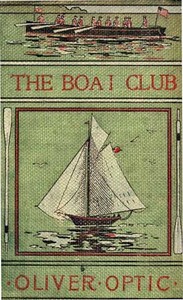
The Boat Club; or, The Bunkers of Rippleton — Inside the Classic can be approached with a clearer sense of reading commitment from its source measurements: 49,490 words, 3 hr 36 min estimated reading time, and 7 detected text sections.
The text analysis averages about 14.1 words per sentence, while the detected sections provide another way to judge how the source is divided.
Project Gutenberg metadata also associates the work with “Boys -- Conduct of life -- Juvenile fiction,” connecting these edition facts with the source record’s subject description.
Explore this collection
These alternatives are selected using recorded categories and estimated reading time.
About 218 minutes
Fantasy Juvenile Worlds
49,982 recorded words. 2 minutes difference from this book's estimate.
View Gutenberg source #21432About 208 minutes
Fantasy Juvenile Worlds
47,689 recorded words. 8 minutes difference from this book's estimate.
View Gutenberg source #26310About 225 minutes
Fantasy Juvenile Worlds
51,721 recorded words. 9 minutes difference from this book's estimate.
View Gutenberg source #24698Search stored excerpts and compare books → Choose by your preferences →
Choices use stored catalog measurements. Estimates vary with reading speed. A shared category is a catalog label, not a claim that two books have the same argument or literary quality.
Search reads excerpt text stored with this catalog and links to its associated Gutenberg record. The connection is stored in the site database; this tool does not recheck that every excerpt is word-for-word identical to that external record. Excerpt search does not cover every chapter and does not verify historical publication dates.
Catalog snapshot checked: 2026-09-25. Coverage: 92 public books, 92 available source excerpts.
Read the complete public-domain text at its original source.
Read on Project GutenbergOliver Optic's The Boat Club; or, The Bunkers of Rippleton (1854) opens with a striking authorial frame: the 1896 revised edition includes both a new introduction and the original preface, creating a layered commentary on the book's own history. Optic notes that readers who first encountered the story at age ten have now passed their half-century, and he seizes the occasion of new electrotype plates to "make a new book of it." This editorial note examines the authorial choices in diction, dialogue, and description that define the work, focusing on the precise nautical language, the moral weight given to discipline, and the way uniforms and commands signal character and community.
The novel's vocabulary is saturated with boating terminology: "up oars," "let fall," "give way together," "ship the oars." These commands are not mere decoration; they function as a moral grammar. When Captain Sedley praises the club's discipline as "most excellent," the compliment follows a sequence of precisely executed maneuvers. The text treats correct nautical form as synonymous with ethical conduct. Boys who obey orders promptly and row in unison are implicitly contrasted with those who steal or lie. The repeated phrase "with admirable precision" links physical coordination to inner rectitude. Optic's diction thus transforms rowing into a visible test of character, where every "shove off" and "way enough" carries moral weight.
The club's uniform—white sailors' trousers, blue jacket, white shirt trimmed with blue, and a tarpaulin hat lettered "Zephyr"—is described with catalog-like specificity. Captain Sedley announces it as a fait accompli, having already spoken to Mr. Burlap the tailor. The boys respond with clapping and cheers; Charles Hardy's "Hurrah!" is the most exuberant. The uniform does more than identify members: it erases prior social distinctions and creates a visible brotherhood. When the boys return from the tailor's, "hundreds had collected on the bank to see them row." The crowd's gaze validates the transformation. Optic uses the uniform as a shorthand for belonging, and the detailed description—down to gilt letters—anchors the club's identity in material objects.
Optic's dialogue often carries subtext that the narrator flags for the reader. When Charles Hardy proposes "Three cheers for Tony Weston!" Captain Sedley "could not but question the motives of him who had proposed them." The narrator does not explain the suspicion, leaving the reader to infer that Hardy's cheer may be insincere or manipulative. Elsewhere, Tony's mother fears "some of the boys should taunt him with the occurrences of the past few days," a line that hints at offstage events without detailing them. These moments of withheld information create a gap between what characters say and what the narrator implies, inviting the reader to read between the lines of ostensibly straightforward boyish speech.
The descriptive passages in The Boat Club often read like a manual for proper rowing. The Zephyr "darted like an arrow through the water, her sharp bow cutting the tiny waves like a knife, making a most musical ripple as it dashed a clear jet of white foam as high as the gunwale." The simile is functional: it conveys speed and precision. The foam's height is measured against the gunwale, a technical detail. Similarly, the boat-house is "entirely completed, furnished, and ready for the occupancy of the club"—a checklist of readiness. Optic's descriptions prioritize clarity and utility over atmosphere. They tell the reader exactly how things look and work, reinforcing the novel's emphasis on order, preparation, and the tangible rewards of disciplined effort.
Readers approaching The Boat Club should attend to the interplay between the 1854 original and the 1896 revision. Optic's own introduction frames the book as a reconstructed vessel, and the text rewards attention to the precise language of command and the social weight of uniforms. The novel's moral lessons are embedded not in abstract statements but in the concrete details of oars, tarpaulins, and coordinated movement. Watching how characters speak, obey, and row reveals the book's quiet argument about virtue as visible, practiced skill.
I have always found something tender in how The Boat Club measures a boy’s worth by his steady oar and neat uniform—order as a quiet promise. That same patient faith in small, deliberate things lives in Red, White, Blue Socks, Part First Being the First Book — Background and Themes, where a simple garment carries its own gentle lesson. Both whisper that discipline need not shout.
Use these questions to collect your thoughts before moving on.