About 243 minutes
When Grandmamma Was New: The Story of a Virginia Childhood — A Reader’s Guide
Fantasy Juvenile Worlds
55,802 recorded words. 1 minutes difference from this book's estimate.
View Gutenberg source #25118
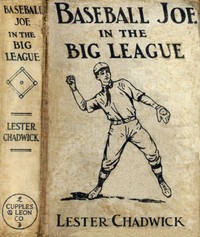
This digital edition of Baseball Joe in the Big League; or, A Young Pitcher's Hardest Struggles — Story, Setting & Ideas is described by source-level measurements including 55,578 words, 4 hr 2 min estimated reading time, and 6 detected text sections.
The text analysis averages about 12.9 words per sentence, while the detected sections provide another way to judge how the source is divided.
Project Gutenberg metadata also associates the work with “Conduct of life -- Juvenile fiction,” connecting these edition facts with the source record’s subject description.
Explore this collection
These alternatives are selected using recorded categories and estimated reading time.
About 243 minutes
Fantasy Juvenile Worlds
55,802 recorded words. 1 minutes difference from this book's estimate.
View Gutenberg source #25118About 243 minutes
Fantasy Juvenile Worlds
55,865 recorded words. 1 minutes difference from this book's estimate.
View Gutenberg source #25847About 243 minutes
Fantasy Juvenile Worlds
55,869 recorded words. 1 minutes difference from this book's estimate.
View Gutenberg source #32520Search stored excerpts and compare books → Choose by your preferences →
Choices use stored catalog measurements. Estimates vary with reading speed. A shared category is a catalog label, not a claim that two books have the same argument or literary quality.
Search reads excerpt text stored with this catalog and links to its associated Gutenberg record. The connection is stored in the site database; this tool does not recheck that every excerpt is word-for-word identical to that external record. Excerpt search does not cover every chapter and does not verify historical publication dates.
Catalog snapshot checked: 2026-09-25. Coverage: 92 public books, 92 available source excerpts.
Read the complete public-domain text at its original source.
Read on Project GutenbergFrom its opening line—'Whew!' whistled Joe Matson—Lester Chadwick's Baseball Joe in the Big League establishes a conversational, energetic voice that carries through the narrative. The prose moves briskly between dialogue and action, with short paragraphs and frequent exclamations that mirror the quick decisions of a baseball game. The story's language is colloquial and direct, using slang like 'corkingly glad' and 'horsehide' to create an informal, period-authentic tone. This voice is consistent whether Joe is discussing strategy with his sister Clara or receiving advice from veteran catcher Boswell, grounding the reader in the world of early twentieth-century baseball.
Chadwick relies heavily on dialogue to advance the plot and reveal character. The opening chapter, 'Two Letters,' unfolds almost entirely through back-and-forth between Joe and Clara, with the narrator stepping in only for brief physical descriptions—'Joe looked out of the window, across a snowy expanse of yard.' This technique keeps the pace brisk and gives the reader direct access to Joe's emotions: surprise, concern, and cautious optimism. Later, the extended conversation between Joe and Boswell about pitching signals uses dialogue to convey technical information without slowing the narrative. The exchange feels natural, with Boswell's seasoned advice—'If your signals are found out, where are you? Up in the air'—delivered in a colloquial rhythm that matches his character. By letting characters speak for themselves, Chadwick maintains momentum while layering in baseball strategy.
The narrative alternates between fast-paced action sequences and quieter moments of internal reflection, creating a varied rhythm. In practice scenes, sentences are short and punchy: 'Practice went on as usual, only it grew harder and more exacting.' The focus is on physical effort and immediate results. But Chadwick also slows down for Joe's private thoughts, as when he 'often wondered' about a suspicious figure named Wessel or felt 'a little apprehensive' about facing the Giants. These reflective passages are brief but effective, giving depth to Joe's character without halting the story. The balance prevents the novel from becoming a mere play-by-play; the reader experiences both the adrenaline of the game and the weight of Joe's ambitions.
Chadwick's language reflects a genuine familiarity with baseball terminology and the culture of the sport in 1915. Terms like 'twirler,' 'battery signs,' and 'stick work' are used without explanation, assuming a knowledgeable reader. The dialogue of players and managers is peppered with period slang—'cinch,' 'double-crossed,' 'fiends at getting next to the signs'—which lends authenticity. The narrative voice itself adopts a slightly formal but friendly tone, addressing the reader directly at times ('Most folks think...'). This blend of technical jargon and colloquial speech creates a distinctive voice that is both instructive and entertaining. The pacing of these informational passages is carefully managed: they are woven into conversations or practice scenes, so the reader learns alongside Joe without feeling lectured.
Readers attentive to shifts in pace will notice how Chadwick uses sentence length and paragraph structure to mirror the tension of baseball. Short, staccato lines during game action contrast with longer, more contemplative passages off the field. The novel rewards those who pay attention to these rhythmic changes, as they often signal key emotional beats—Joe's anxiety before a big game, his relief after a successful play, or his determination to improve. This editorial note encourages you to observe how the language itself becomes a tool for storytelling, shaping your experience of Joe's hardest struggles.
The rain slanted past my window that afternoon, and I kept returning to how Chadwick’s dialogue snaps tight when Joe faces the big-league hitters. After a while, the tension made me restless, so I drifted to my shelf and pulled down the old Leslie Ross volume, its Leslie Ross; or, Fond of a Lark — Reading Companion tucked inside the cover. Curious: both boys just want to be taken seriously, yet take such different paths.
Answer a few questions and save a private reflection on this device.