About 243 minutes
When Grandmamma Was New: The Story of a Virginia Childhood — A Reader’s Guide
Fantasy Juvenile Worlds
55,802 recorded words. 0 minutes difference from this book's estimate.
View Gutenberg source #25118
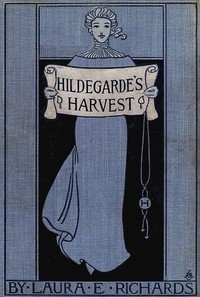
For Hildegarde's Harvest — Themes and Context, the stored edition analysis reports 55,869 words, 4 hr 3 min estimated reading time, and 7 detected text sections.
The text analysis averages about 13.5 words per sentence, while the detected sections provide another way to judge how the source is divided.
Project Gutenberg metadata also associates the work with “Christmas stories,” connecting these edition facts with the source record’s subject description.
Explore this collection
These alternatives are selected using recorded categories and estimated reading time.
About 243 minutes
Fantasy Juvenile Worlds
55,802 recorded words. 0 minutes difference from this book's estimate.
View Gutenberg source #25118About 243 minutes
Fantasy Juvenile Worlds
55,865 recorded words. 0 minutes difference from this book's estimate.
View Gutenberg source #25847About 242 minutes
Fantasy Juvenile Worlds
55,578 recorded words. 1 minutes difference from this book's estimate.
View Gutenberg source #27584Search stored excerpts and compare books → Choose by your preferences →
Choices use stored catalog measurements. Estimates vary with reading speed. A shared category is a catalog label, not a claim that two books have the same argument or literary quality.
Search reads excerpt text stored with this catalog and links to its associated Gutenberg record. The connection is stored in the site database; this tool does not recheck that every excerpt is word-for-word identical to that external record. Excerpt search does not cover every chapter and does not verify historical publication dates.
Catalog snapshot checked: 2026-09-25. Coverage: 92 public books, 92 available source excerpts.
Read the complete public-domain text at its original source.
Read on Project GutenbergFrom its opening sentence—'Hildegarde was walking home from the village, whither she had gone to get the mail'—Laura E. Richards establishes a leisurely, domestic pace that characterizes much of Hildegarde's Harvest. The narrative voice is warm and unhurried, often pausing to let characters tell stories within the story. One such embedded tale, related by Gertrude, recounts how her father buried forty yards of brown gingham in the garden after his wife bought it without consulting him. The anecdote is told in a colloquial, breathless style—'Gone,—vanished; frock and kilt, slip and apron'—that mimics spoken recollection and injects a sudden burst of comedy into the otherwise placid flow.
The narrative voice in Hildegarde's Harvest is markedly conversational, relying on dashes, exclamations, and direct address to create intimacy. Richards frequently shifts from third-person narration to long stretches of dialogue or monologue, as when Gertrude recounts the gingham episode. The language there is vivid and repetitive—'Mammy looked everywhere, but in a few minutes she understood how it was'—and the rhythm accelerates as the story reaches its punchline. This technique gives the novel a layered texture: the outer narrator frames the scene, while inner voices bring their own cadences. The effect is that of a fireside gathering, where tales are passed from speaker to speaker, and the reader is drawn into the circle.
Richards uses parlor games to modulate the novel's tempo. In Chapter IX, the characters play 'Alphabet Stories,' a game invented by Mrs. Merryweather that requires each word to begin with the next letter of the alphabet. The example given—'Alcibiades, brilliant, careless, dashing, engaging fop'—is a compact, rhythmic sentence that contrasts with the longer descriptive passages around it. Such games break the narrative into smaller, playful units, quickening the pace and adding a layer of metafictional wit. The reader is reminded that this is a world where storytelling itself is a form of entertainment, and the author controls tempo by alternating between relaxed conversation and structured wordplay.
Letters and lists serve as rhythmic counterpoints in the novel. The chapter 'The Morning Mail' introduces a letter from Bell, whose voice is distinct from the narrator's—more impulsive, with shorter sentences and frequent dashes. The catalog of items in the Christmas drawer (Chapter II) creates a staccato effect through enumeration: 'frock and kilt, slip and apron.' These passages slow the narrative, inviting the reader to pause over details. Later, the description of the box of clothes—'pink and blue, yellow and green'—uses color names in rapid succession to mimic the excitement of discovery. By varying sentence length and structure, Richards controls the reading experience, alternating between flowing description and abrupt, itemized lists that mirror the characters' emotional states.
Readers attentive to language will find that Hildegarde's Harvest rewards close attention to its shifts in register—from the formal, slightly archaic 'whither' of the opening to the colloquial 'jolly good game' of Gerald. The novel's pace is not uniform; it ebbs and flows with each embedded story, game, or letter. Observing these changes offers a way into Richards' craft, revealing how she orchestrates a chorus of voices within a seemingly simple domestic frame.
Somewhere in the gentle pauses of Hildegarde’s Harvest, I kept thinking how letters once held a room’s whole weather. That same unhurried trust lives in The William Henry Letters — Edition Insights, where voices arrive like old friends, not performances. Just a quieter way of telling, I suppose, the way we used to listen before we hurried. I miss that.
Answer a few questions and save a private reflection on this device.