About 243 minutes
Patty's Friends — Background and Themes
Fantasy Juvenile Worlds
55,865 recorded words. 0 minutes difference from this book's estimate.
View Gutenberg source #25847
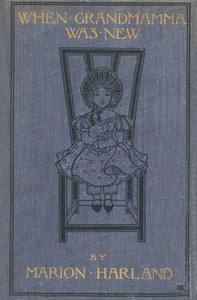
The source record for When Grandmamma Was New: The Story of a Virginia Childhood — A Reader’s Guide measures this digital text at 55,802 words, 4 hr 3 min estimated reading time, and 7 detected text sections.
The text analysis averages about 18.5 words per sentence, while the detected sections provide another way to judge how the source is divided.
Project Gutenberg metadata also associates the work with “Christian life -- Juvenile fiction,” connecting these edition facts with the source record’s subject description.
Explore this collection
These alternatives are selected using recorded categories and estimated reading time.
About 243 minutes
Fantasy Juvenile Worlds
55,865 recorded words. 0 minutes difference from this book's estimate.
View Gutenberg source #25847About 243 minutes
Fantasy Juvenile Worlds
55,869 recorded words. 0 minutes difference from this book's estimate.
View Gutenberg source #32520About 242 minutes
Fantasy Juvenile Worlds
55,578 recorded words. 1 minutes difference from this book's estimate.
View Gutenberg source #27584Search stored excerpts and compare books → Choose by your preferences →
Choices use stored catalog measurements. Estimates vary with reading speed. A shared category is a catalog label, not a claim that two books have the same argument or literary quality.
Search reads excerpt text stored with this catalog and links to its associated Gutenberg record. The connection is stored in the site database; this tool does not recheck that every excerpt is word-for-word identical to that external record. Excerpt search does not cover every chapter and does not verify historical publication dates.
Catalog snapshot checked: 2026-09-25. Coverage: 92 public books, 92 available source excerpts.
Read the complete public-domain text at its original source.
Read on Project GutenbergThe book opens with a child, Fritz, declaring he likes stories about 'when Grandmamma was new,' a phrase that becomes the title. The author, writing as the grandmother, addresses her sons directly, framing the narrative as oral tales told over winter evenings. This framing device immediately establishes a dual perspective: the adult narrator recalling her own childhood and the child audience listening. The first chapter, 'The Tragedy of Rozillah,' plunges into a specific incident involving a doll, a sullen child named Molly (the young narrator), and a kitchen yard setting. The voice is immediate and conversational, with vivid sensory details like 'gray and gritty expanse' and 'sickly peach tree.'
The narrative voice is a distinctive blend of adult reflection and childlike immediacy. The opening lines—'UST look at her now, Molly! Isn't she the sweetest thing you ever saw?'—plunge the reader into a scene without preamble, mimicking oral storytelling. The narrator, Molly, is both the child experiencing events and the adult recalling them, but the text rarely breaks the child's perspective. The grandmother frame (the author addressing her sons) appears only in the preface and chapter headings, not in the body of the excerpts. This creates a layered reading experience: the reader is simultaneously a child listening to a tale and an adult observing the moral and social lessons embedded in the story.
The chapter titles—'The Tragedy of Rozillah,' 'A Prize Fight and a Race,' 'Van Diemen's Land,' 'Oiled Calico'—suggest a series of discrete incidents rather than a continuous plot. Each chapter appears to center on a specific event or object (a doll, a pet, a punishment) that teaches a moral or practical lesson. In the excerpt from later in the book, the narrator sets a trap for cats that have killed her pets, using a brick, string, and raw liver. The elaborate scheme—complete with a 'home-made infernal machine'—ends in chaos and laughter, but the episode is framed by the child's earlier lament: 'It's no use making myself happy for a little while just to be sorry for ever and ever so long afterward.' This tension between mischief and melancholy recurs throughout the excerpts.
The setting is a Virginia plantation or country estate, with details that signal a specific historical moment: enslaved servants like 'Uncle Ike' and 'Mary 'Liza,' a father smoking a 'Powhatan pipe,' and references to 'the garden gate' and 'the stable.' The social hierarchy is implicit but present—the child narrator orders Uncle Ike to help with the trap, and he obeys without question. The catalog subjects list 'Enslaved persons -- Juvenile fiction,' indicating that enslaved characters appear, but the excerpts do not reveal their interior lives. The physical environment—'kitchen yard,' 'lilac hedge,' 'front porch'—is rendered in concrete, sensory language that grounds the episodic adventures in a specific place and time.
Animals and their fates recur throughout the excerpts. The first chapter involves a doll (Rozillah), but later excerpts mention 'old hares,' 'live things,' and cats that are 'murdered by other folks' cats.' The narrator's trap for the marauding cats is motivated by grief for her pets, and the scene ends with 'caterwauling' and laughter, but the underlying sadness is palpable. The child's epigram—'It's no use making myself happy for a little while just to be sorry'—suggests a pattern of attachment and loss. The catalog subject 'Children and death' confirms this theme. The excerpts do not reveal whether the narrator's guilt or remorse follows the trap, but the pattern of pet death and emotional fallout is clearly established.
Readers approaching this book should expect a series of vignettes rather than a linear plot. The child narrator's voice is consistent and engaging, but the moral lessons are often implicit, emerging from the consequences of actions rather than direct instruction. Pay attention to the social context—the presence of enslaved characters, the rural setting, the family dynamics—as these shape the narrator's world. The book rewards attention to recurring motifs (pets, death, guilt) and the tension between the child's mischief and the adult's retrospective understanding.
That book made me think of the quiet way a child notices what adults accept as ordinary — the traps, the servants, the slow afternoons. Little Bobtail; or, The Wreck of the Penobscot. — Edition Insights carries some of that same gentle lurch, a sense of being small against something larger, and I kept turning it over afterward.
Use these questions to collect your thoughts before moving on.