About 189 minutes
A Little Maid of Province Town — Story, Setting & Ideas
Fantasy Juvenile Worlds
43,272 recorded words. 21 minutes difference from this book's estimate.
View Gutenberg source #26256
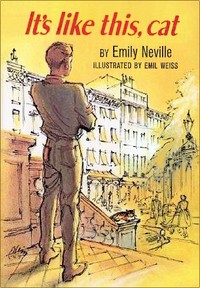
The source record for It's like this, cat — Story, Setting & Ideas measures this digital text at 38,537 words, 2 hr 48 min estimated reading time, and 8 detected text sections.
The text analysis averages about 13.4 words per sentence, while the detected sections provide another way to judge how the source is divided.
Project Gutenberg metadata also associates the work with “Friendship -- Juvenile fiction,” connecting these edition facts with the source record’s subject description.
Explore this collection
These alternatives are selected using recorded categories and estimated reading time.
About 189 minutes
Fantasy Juvenile Worlds
43,272 recorded words. 21 minutes difference from this book's estimate.
View Gutenberg source #26256About 198 minutes
Fantasy Juvenile Worlds
45,434 recorded words. 30 minutes difference from this book's estimate.
View Gutenberg source #33615About 199 minutes
Fantasy Juvenile Worlds
45,706 recorded words. 31 minutes difference from this book's estimate.
View Gutenberg source #30966Search stored excerpts and compare books → Choose by your preferences →
Choices use stored catalog measurements. Estimates vary with reading speed. A shared category is a catalog label, not a claim that two books have the same argument or literary quality.
Search reads excerpt text stored with this catalog and links to its associated Gutenberg record. The connection is stored in the site database; this tool does not recheck that every excerpt is word-for-word identical to that external record. Excerpt search does not cover every chapter and does not verify historical publication dates.
Catalog snapshot checked: 2026-09-25. Coverage: 92 public books, 92 available source excerpts.
Read the complete public-domain text at its original source.
Read on Project GutenbergThe novel opens with a direct, wry confession: “My father is always talking about how a dog can be very educational for a boy. This is one reason I got a cat.” That sentence sets the tone for a story told in a close, colloquial first-person voice, where the narrator’s choices are often reactions to his father’s roaring. The setting is firmly Manhattan—Gramercy Park, Third Avenue, a walk-up apartment—and the family dynamics are sketched through small, telling details: the mother’s asthma, the father’s habit of pulling the plug on the record player. The cat, named Cat, becomes both a source of conflict and a bridge to independence.
The narrator’s voice is the engine of the book. He speaks in short, punchy sentences, with a teenager’s blend of sarcasm and earnestness. When his father roars about a Belafonte record, he answers, “Pop, I say patiently, ‘there are no rabbits out on Third Avenue. Honest, there aren’t.’” The humor comes from the mismatch between his father’s nostalgia for a rural boyhood and the reality of city life. The narrator doesn’t explain his feelings; he shows them through action—slamming doors, running to Aunt Kate’s, grabbing a stick and ball. This voice stays consistent through the excerpts, never slipping into adult reflection. Readers hear a boy who is smart but not precocious, angry but not bitter.
New York is not just a backdrop; it’s a character the narrator navigates in response to family friction. When he fights with his father, he goes to Aunt Kate’s, “Crazy Kate the Cat Woman,” who lives with stray cats. Later, he chases Cat onto a parkway, gets chased by kids, and is rescued by a cop. The geography is specific: Gramercy Park, the bridge, the subway, Coney Island, the Fulton Fish Market. The narrator’s movements trace his attempts to find space away from his father’s roaring. Even the cat’s behavior—raking his chest, hissing, biting—mirrors the physicality of these escapes. The city offers both danger and refuge, and the narrator learns to read its signals, like the cop who “saunters out” to break up a fight.
The central relationship is the narrator’s with his father, and the excerpts show a clear pattern: a blow-up, a slam-out, then a tentative reconciliation. After the narrator runs away following a fight about Cat, his parents find him at Kate’s. His father starts bellowing, but then “takes off his glasses and scratches his head with them, like he always does when he’s thinking. He looks me in the eye and says, ‘I’m sorry. I shouldn’t have laughed.’” This moment of apology is rare and specific. The father’s gesture—scratching his head with his glasses—is a physical detail that humanizes him. The narrator doesn’t comment on it; he just reports it. The pattern suggests that the story will continue to circle these confrontations, each time with small shifts in understanding.
The later excerpts expand the narrator’s world beyond family. He starts at a new high school, “Charles Evans Hughes High,” which is “about the size of Penn Station.” He meets a boy with skin-diving equipment and plans to save for fins and a mask. He explains Rosh Hashanah to a friend from Connecticut, noting that about half the kids in his school are Jewish. These details ground the story in a specific time and place—early 1960s New York—and show the narrator’s growing curiosity. He doesn’t just react to his father; he makes plans, asks questions, and notices differences between city and country life. The cat remains a presence, but the narrator’s attention is shifting toward his own interests and friendships.
The excerpts suggest a novel that moves between domestic comedy and urban adventure, held together by a narrator who is learning to see his father—and himself—more clearly. Readers should pay attention to the small physical details: how the father scratches his head with his glasses, how the cat’s claws rake the narrator’s chest, how the mother’s asthma flares. These are the clues to the emotional undercurrents. The story does not resolve neatly; it accumulates moments of understanding, one argument and one escape at a time.
That cat was never just a pet, you know? At fourteen, every walk through Manhattan became a way to figure out who you are against someone else’s idea of you. The same quiet ache stays with me from It’s like this, cat. I found a gentler kind of that loneliness in My New Home — Context and Discussion, like remembering how a new place slowly starts to feel less strange.
A brief reflection can help important ideas stay with you longer.