About 319 minutes
Down the Slope — Themes and Context
Fantasy Juvenile Worlds
73,211 recorded words. 8 minutes difference from this book's estimate.
View Gutenberg source #28697
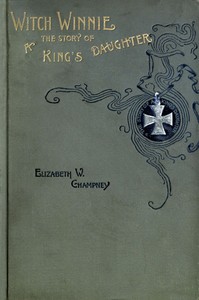
The source record for Witch Winnie: The Story of a "King's Daughter" — Background and Themes measures this digital text at 71,459 words, 5 hr 11 min estimated reading time, and 9 detected text sections.
The text analysis averages about 19.3 words per sentence, while the detected sections provide another way to judge how the source is divided.
Project Gutenberg metadata also associates the work with “Conduct of life -- Juvenile fiction,” connecting these edition facts with the source record’s subject description.
Explore this collection
These alternatives are selected using recorded categories and estimated reading time.
About 319 minutes
Fantasy Juvenile Worlds
73,211 recorded words. 8 minutes difference from this book's estimate.
View Gutenberg source #28697About 302 minutes
Fantasy Juvenile Worlds
69,302 recorded words. 9 minutes difference from this book's estimate.
View Gutenberg source #31200About 322 minutes
Fantasy Juvenile Worlds
73,932 recorded words. 11 minutes difference from this book's estimate.
View Gutenberg source #31007Search stored excerpts and compare books → Choose by your preferences →
Choices use stored catalog measurements. Estimates vary with reading speed. A shared category is a catalog label, not a claim that two books have the same argument or literary quality.
Search reads excerpt text stored with this catalog and links to its associated Gutenberg record. The connection is stored in the site database; this tool does not recheck that every excerpt is word-for-word identical to that external record. Excerpt search does not cover every chapter and does not verify historical publication dates.
Catalog snapshot checked: 2026-09-25. Coverage: 92 public books, 92 available source excerpts.
Read the complete public-domain text at its original source.
Read on Project GutenbergElizabeth W. Champney opens Witch Winnie: The Story of a "King's Daughter" with a dedication poem that immediately establishes a dual register: the speaker calls the child both "my little witch" and "a Daughter of the King," blending mischief with piety. This tension between playful nicknames and earnest moral purpose runs through the novel's diction. Chapter titles such as "Boarding-School Scrapes" and "Guinevere's Gown" promise lighthearted schoolgirl adventures, yet the excerpts reveal a narrative that moves swiftly into descriptions of urban poverty, child labor, and institutional charity.
Champney uses nicknames to signal character traits and moral standing. The boy Lovell Trimble is "familiarly, but most inappropriately, nicknamed by the other children, Lovey Dimple"—a name that clashes with his "homely, unprepossessing" appearance and "disproportionately large head." The narrator's parenthetical correction underscores the gap between the children's affectionate cruelty and the reader's sympathy. Similarly, Emma Jane is described as "an unlovely and unloving girl who disliked children," yet her transformation is marked by a "madonna-like" expression. The nicknames do not merely label; they compress a moral arc into a single epithet.
Champney's descriptive passages resist sentimental gloss. Lovey's father is "the unsuccessful inventor of Rickett's Court" who "spent all his former earnings in securing patents." The boy's work with a flap-jack seller is rendered in precise, unglamorous detail: "wheeling 'the machine'" through winter nights, racing "at ambulance speed" between theaters, eating leftover batter because "it would not keep." The prose accumulates concrete nouns—"hot-flap-jack seller," "dab of butter," "lake of molasses"—that ground the story in sensory reality. When the Society for the Prevention of Cruelty to Children intervenes, the language remains matter-of-fact: "they arrested Lovey in default of his employer."
Dialogue in the excerpts is sparse but strategically placed. Miss Prillwitz "rashly, but not unnaturally, decided that nothing was to be expected from such a father"—the indirect discourse blends her voice with the narrator's judgment. The flap-jack man "discreetly absconded," a verb choice that implies both cunning and cowardice. When the father "on being notified, approved the action, and paid her board regularly," the flat bureaucratic phrasing contrasts with the earlier vividness, highlighting the impersonal machinery of charity. Champney lets the characters' words and the narrator's commentary together map a social hierarchy from street vendor to court official.
The novel's structure juxtaposes whimsical chapter headings with gritty content. "The Princess" and "Little Prince del Paradiso" evoke romance, but the excerpts show a Home for children of working-women, an "Emergency Bed" for a boy whose mother is in the hospital, and a father who "had gone upon a spree." Champney's introduction explicitly grounds the fiction in real charity work: "the founding of the Home of the Elder Brother was suggested by the work of some real children." This blend of invented characters and documentary impulse creates a hybrid form—part moral tale, part social reform pamphlet—that asks readers to see the fantastic as a lens for the actual.
Readers attentive to diction will notice how Champney shifts between the colloquial and the elevated, often within a single paragraph. The phrase "full brain and empty stomach" condenses a social critique into a balanced clause. The novel rewards those who track its tonal shifts—from the dedication's playful rhymes to the clinical language of the Society for the Prevention of Cruelty to Children—as a deliberate authorial strategy to make moral instruction feel immediate rather than preachy.
Sometimes I think of Witch Winnie, how Champney softened the city's rough edges with nicknames like Lovey Dimple. It reminds me of a quieter kinship with The Settler and the Savage — Background and Themes, where hardship also wears a gentler face. Both hold that peculiar patience, letting a child's gaze carry the weight without ever shouting. A fond, steady hand on the shoulder.
Build a private reading journal entry for this title.