About 206 minutes
The Temptation of St. Antony; Or, A Revelation of the Soul — Key Ideas to Explore
Science Fiction Utopias
47,260 recorded words. 20 minutes difference from this book's estimate.
View Gutenberg source #25053
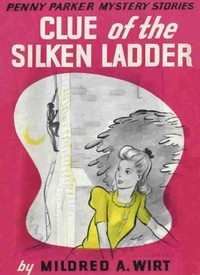
Before opening Clue of the Silken Ladder — Key Ideas to Explore, the edition data offers a quick orientation: 42,664 words, 3 hr 6 min estimated reading time, and 7 detected text sections.
The text analysis averages about 10.5 words per sentence, while the detected sections provide another way to judge how the source is divided.
Project Gutenberg metadata also associates the work with “Adventure and adventurers -- Juvenile fiction,” connecting these edition facts with the source record’s subject description.
Explore this collection
These alternatives are selected using recorded categories and estimated reading time.
About 206 minutes
Science Fiction Utopias
47,260 recorded words. 20 minutes difference from this book's estimate.
View Gutenberg source #25053About 225 minutes
Science Fiction Utopias
51,526 recorded words. 39 minutes difference from this book's estimate.
View Gutenberg source #25967About 228 minutes
Science Fiction Utopias
52,406 recorded words. 42 minutes difference from this book's estimate.
View Gutenberg source #23292Search stored excerpts and compare books → Choose by your preferences →
Choices use stored catalog measurements. Estimates vary with reading speed. A shared category is a catalog label, not a claim that two books have the same argument or literary quality.
Search reads excerpt text stored with this catalog and links to its associated Gutenberg record. The connection is stored in the site database; this tool does not recheck that every excerpt is word-for-word identical to that external record. Excerpt search does not cover every chapter and does not verify historical publication dates.
Catalog snapshot checked: 2026-09-25. Coverage: 92 public books, 92 available source excerpts.
Read the complete public-domain text at its original source.
Read on Project GutenbergThe opening chapter of Clue of the Silken Ladder introduces Penny Parker not through a detective case but through a parking ticket. Her irritation at the fine, her banter with friend Louise, and her nostalgia for her old car "Leaping Lena" establish a voice that is brisk, lightly humorous, and rooted in everyday frustrations. The catalog subjects list this as a mystery and adventure story featuring a woman detective, yet the early pages dwell on mundane details—gasoline costs, a father’s expectations—rather than any crime. The promised adventure emerges only gradually, through a séance at the Celestial Temple and a medium named Al Gepper, whom Penny suspects of fraud.
The excerpts reveal a central tension between Penny’s skepticism and the willingness of others to believe in supernatural phenomena. When Mrs. Weems, the housekeeper, is convinced that medium Al Gepper has genuinely contacted the spirit of Cousin David, Penny counters with a practical explanation: “Al Gepper could have obtained much of his information from persons in Riverview.” The text does not show Penny gathering evidence to support her claim, but it does show her arguing against the séance’s validity. Mrs. Weems insists on the accuracy of Gepper’s description of Cousin David’s scar—a detail the medium could not have known—yet Penny remains unmoved. The narrative aligns with Penny’s perspective, framing the séance as a trick rather than a genuine paranormal event.
Penny’s father, Anthony Parker, owns The Riverview Star, and the excerpts show how the newspaper becomes a tool for exposing fraud. After hearing Penny’s account, Mr. Parker immediately plans a campaign: “The Star will take the initiative in driving these mediums, character readers and the like out of Riverview!” He assigns a reporter and photographer to cover the next séance, intending to tip off the police and make arrests. This sequence positions the newspaper as an active agent in the story, not merely a backdrop. The catalog subject “Mystery and detective stories” is fulfilled here through journalistic investigation rather than traditional sleuthing. Penny’s role is to gather information and report it to her father, who then mobilizes the paper’s resources.
Despite the story’s supernatural trappings—séances, materializations, a “Celestial Temple”—the excerpts are grounded in concrete, ordinary details. Penny’s new car is described with attention to its “highly polished chrome plate” and “streamlined body.” The parking ticket is a five- or ten-dollar fine. The medium’s séance is “exhausting,” and he needs to “refresh myself with sleep.” These details create a contrast between the mundane world and the claims of the spirit realm. The catalog subject “Adventure and adventurers” might suggest exotic escapades, but the adventure here is rooted in the familiar: a local fraud operation, a family newspaper, and a teenager’s allowance. The silken ladder of the title, glimpsed in the frontispiece caption, remains a promise of action yet to come.
Readers approaching Clue of the Silken Ladder should note that the excerpts cover only the first thirteen chapters and the opening of the campaign against the medium. The full story may develop the silken ladder clue and the adventure promised by the catalog subjects. Pay attention to how Penny’s skepticism is tested and whether the newspaper campaign succeeds. The text rewards attention to small details—like the scar on Cousin David’s face—that may later prove significant.
That rainy afternoon, I was lost in the quiet trickle of Penny Parker’s doubts about the phony medium, how her certainty grew not from grand proof but from watching small fiddling hands. It reminded me, vaguely, of the gentle worry in Peggy Stewart at School — Key Ideas to Explore, where trust is tested in smaller, everyday ways — a different kind of séance, maybe, but the same slow opening of one’s eyes.
Build a private reading journal entry for this title.