About 228 minutes
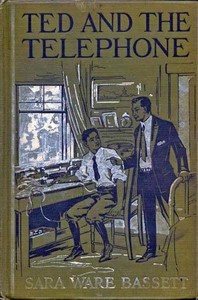
Ted and the Telephone — Inside the Classic
Science Fiction Utopias
52,406 recorded words. 3 minutes difference from this book's estimate.
View Gutenberg source #23292

The source record for Rufus and Rose; Or, The Fortunes of Rough and Ready — A Closer Reading measures this digital text at 51,526 words, 3 hr 45 min estimated reading time, and 6 detected text sections.
The text analysis averages about 12.2 words per sentence, while the detected sections provide another way to judge how the source is divided.
Project Gutenberg metadata also associates the work with “Conduct of life -- Fiction,” connecting these edition facts with the source record’s subject description.
Explore this collection
These alternatives are selected using recorded categories and estimated reading time.
About 228 minutes
Science Fiction Utopias
52,406 recorded words. 3 minutes difference from this book's estimate.
View Gutenberg source #23292About 206 minutes
Science Fiction Utopias
47,260 recorded words. 19 minutes difference from this book's estimate.
View Gutenberg source #25053About 186 minutes
Science Fiction Utopias
42,664 recorded words. 39 minutes difference from this book's estimate.
View Gutenberg source #34591Search stored excerpts and compare books → Choose by your preferences →
Choices use stored catalog measurements. Estimates vary with reading speed. A shared category is a catalog label, not a claim that two books have the same argument or literary quality.
Search reads excerpt text stored with this catalog and links to its associated Gutenberg record. The connection is stored in the site database; this tool does not recheck that every excerpt is word-for-word identical to that external record. Excerpt search does not cover every chapter and does not verify historical publication dates.
Catalog snapshot checked: 2026-09-25. Coverage: 92 public books, 92 available source excerpts.
Read the complete public-domain text at its original source.
Read on Project GutenbergThe catalog subjects for Rufus and Rose; Or, The Fortunes of Rough and Ready list 'Conduct of life -- Fiction' and 'Clerks -- Fiction,' but the excerpts reveal a story more concerned with economic calculation than moral instruction. Rufus, the young protagonist, is introduced not through a lesson in virtue but through a business arrangement: he invests his savings in a stationery store and negotiates a salary raise from eight to ten dollars a week. The narrative dwells on stock quotations, board payments, and profit margins, suggesting that Alger's interest lies as much in financial mechanics as in character development.
The catalog subject 'Stepfathers -- Fiction' appears in the excerpts only indirectly. James Martin, the stepfather, is introduced as a man who 'had no objection to appearing respectable, provided it were at other people's expense.' His reappearance in Chapter X triggers a series of plots involving theft and entrapment, but the excerpts focus on his economic parasitism rather than his familial role. Martin's 'wild-goose chase' and 'business engagement' are schemes to extract money, not to assert paternal authority. The stepfather functions as a financial antagonist, a threat to Rufus's hard-won stability, rather than a figure of domestic drama. This aligns with Alger's broader pattern of framing moral conflicts as economic ones.
The catalog subject 'Siblings -- Fiction' is central to the excerpts, but the relationship between Rufus and Rose is depicted primarily through economic decisions. Rufus's employer, Mr. Turner, raises his pay because 'he has a little sister to take care of, and ten dollars a week won't go far in these times.' Rufus himself reports paying 'eight dollars a week for both of us' for board, and using his stationery store profits for 'clothes for myself and sister.' Rose appears as a financial responsibility, not a character with dialogue or agency. The sibling bond is expressed through budgeting and investment, reinforcing the novel's preoccupation with material security as the foundation of family duty.
The catalog subject 'New York (N.Y.) -- History -- 19th century -- Fiction' is evoked through specific locations and economic activities. Rufus works in an office on Wall Street, studies 'stock quotations,' and invests in a 'stationery store on Sixth Avenue.' The city is a grid of commercial opportunities, but also of dangers: Martin's schemes involve 'the house in Waverley Place' and a 'tin box' that suggests hidden assets. The excerpts do not describe streets, crowds, or tenements; instead, New York is abstracted into a financial ecosystem where success depends on mastering prices and people. This selective geography reflects Alger's focus on upward mobility through commerce rather than urban realism.
Readers approaching Rufus and Rose through its catalog subjects should note the gap between moral labels and actual content. The novel is less a conduct manual than a primer on financial survival, where virtue is measured in dollars saved and risks calculated. Pay attention to how Alger uses economic details—board rates, stock tips, profit shares—to structure both plot and character. The excerpts suggest that the story's engine is not family feeling but fiscal strategy.
The rain kept time with the pages of Rufus and Rose, and I kept thinking how Alger’s boys always reach for a future that feels just out of grasp. That ache lingered past the last chapter. It drifted, almost without my willing it, toward Flaubert’s Frédéric, whose ambitions dissolve so differently. Sentimental Education; Or, The History of a Young Man. Volume 2 — Context and Discussion sat nearby, and the afternoon quietly folded itself into that older, softer resignation.
Save your reaction, strongest insight, and memorable passage.