About 273 minutes
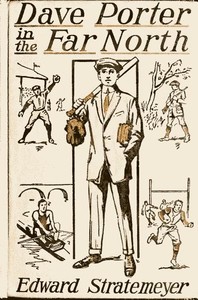
Dave Porter in the Far North; Or, The Pluck of an American Schoolboy — Key Ideas to Explore
Science Fiction Utopias
62,642 recorded words. 1 minutes difference from this book's estimate.
View Gutenberg source #28861
Before opening The Copper Princess: A Story of Lake Superior Mines — Edition Insights, the edition data offers a quick orientation: 62,861 words, 4 hr 34 min estimated reading time, and 7 detected text sections.
The text analysis averages about 21.7 words per sentence, while the detected sections provide another way to judge how the source is divided.
Project Gutenberg metadata also associates the work with “Adventure and adventurers -- Juvenile fiction,” connecting these edition facts with the source record’s subject description.
Explore this collection
These alternatives are selected using recorded categories and estimated reading time.
About 273 minutes
Science Fiction Utopias
62,642 recorded words. 1 minutes difference from this book's estimate.
View Gutenberg source #28861About 276 minutes
Science Fiction Utopias
63,356 recorded words. 2 minutes difference from this book's estimate.
View Gutenberg source #22113About 228 minutes
Science Fiction Utopias
52,406 recorded words. 46 minutes difference from this book's estimate.
View Gutenberg source #23292Search stored excerpts and compare books → Choose by your preferences →
Choices use stored catalog measurements. Estimates vary with reading speed. A shared category is a catalog label, not a claim that two books have the same argument or literary quality.
Search reads excerpt text stored with this catalog and links to its associated Gutenberg record. The connection is stored in the site database; this tool does not recheck that every excerpt is word-for-word identical to that external record. Excerpt search does not cover every chapter and does not verify historical publication dates.
Catalog snapshot checked: 2026-09-25. Coverage: 92 public books, 92 available source excerpts.
Read the complete public-domain text at its original source.
Read on Project GutenbergFrom its first chapter, "Startling Introduction of Tom Trefethen," Kirk Munroe's The Copper Princess establishes a pattern of abrupt, often dangerous encounters that propel the narrative. The novel's structure relies on a constant vertical axis: the surface world of Lake Superior's Upper Peninsula and the deep shafts of copper mines. Chapter titles such as "A Mile Beneath the Surface" and "Lost in a Prehistoric Mine" signal that the story's tension derives from characters moving between these two realms. The excerpts show protagonist Peveril trapped in an ancient mine shaft, where he discovers copper tools and battles rats, while the frontispiece depicts "a girlish figure" on a cliff face—likely the titular Copper Princess. This note traces how Munroe uses setting, recurring images of copper, and scene transitions to build suspense.
The chapter list reveals a deliberate alternation between above-ground action and underground peril. Early chapters like "Starting in Search of the Copper Princess" and "The Trefethens" establish surface-level relationships, while "A Mile Beneath the Surface" and "In the New Shaft" plunge the reader into the mines. Later, "Log-wreckers and Smugglers" and "A Sea Fight on Lake Superior" return to open water and land. This oscillation creates a rhythm of confinement and release. The excerpt from Peveril's entrapment in the prehistoric mine—where he reflects, "I may live for several days, but I must live them alone"—is a low point in this vertical journey. His subsequent escape and return to the surface (implied by chapter titles like "Rescued from the Shaft") complete a descent-ascent arc that repeats throughout the novel.
Copper is not merely the mineral being mined; it functions as a recurring material and symbolic thread. In the prehistoric mine, Peveril stumbles over "hammers and hatchets, chisels, knives, and other tools ... all of tempered copper." This discovery links the modern mining enterprise to ancient peoples, giving the setting historical depth. The novel's title, The Copper Princess, suggests a personification of the metal—perhaps a young woman associated with the mine or a rich vein. The frontispiece shows a girl on a cliff, and chapter "A Royal Name for a Royal Mine" hints at naming a claim after her. Copper thus bridges the industrial (tools, mining) and the romantic (the princess figure), grounding the adventure in a tangible resource.
The excerpts portray the underground as a crucible where characters are tested. Peveril's soliloquy in the shaft moves from despair—"What have I done to deserve such a fate?"—to resolve: "I will no longer be either" an ingrate or a coward. This interior shift is mirrored by his physical actions: he gathers copper tools, kills a rat for food, and surveys his prison. The mine is described as "of artificial construction," a human-made labyrinth that becomes a stage for resourcefulness. Other chapter titles, such as "Peveril in the Hands of His Enemies" and "From One Trap Into Another," suggest that the underground repeatedly serves as a site of captivity and escape. The darkness and isolation strip away social roles, forcing characters to rely on pluck and ingenuity.
Munroe contrasts the claustrophobic mine shafts with expansive Lake Superior settings. Chapter titles like "A Sea Fight on Lake Superior" and "Log-wreckers and Smugglers" introduce open-water action, while "A Night with a Madman" and "Left in Sole Possession" suggest isolated, confined spaces. The excerpt from the shaft emphasizes sensory deprivation: "the feeble light finding its way down the shaft" and the "black pool" below. In contrast, the frontispiece shows a figure on a cliff, open to the sky. This alternation keeps the reader off-balance, never settling into one environment for long. The novel's pacing depends on these shifts, with each return to the surface offering relief but also new dangers, such as smugglers or madmen.
Readers attentive to the novel's geography will notice how Munroe uses the mine as both a literal setting and a narrative engine. The copper tools, the rats, and the vertical shafts are not mere decoration but structural elements that drive Peveril's transformation. The Copper Princess herself remains a distant figure, glimpsed on cliffs and named in chapters, her identity tied to the mineral wealth below. This interplay of surface and depth, of open air and rock-bound darkness, gives the story its distinctive rhythm.
Reading about the Copper Princess’s descent into those prehistoric shafts, I kept thinking of another kind of descent—the one in The Temptation of St. Antony; Or, A Revelation of the Soul — Key Ideas to Explore. Both feel less like journeys into rock or desert than into a particular quietness of the mind, where every echo sounds like something waiting to be remembered.
Build a private reading journal entry for this title.