About 101 minutes
Leslie Ross; or, Fond of a Lark — Reading Companion
Fantasy Juvenile Worlds
23,002 recorded words. 16 minutes difference from this book's estimate.
View Gutenberg source #25827
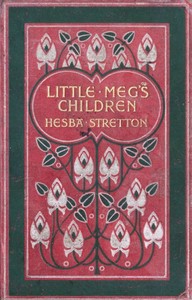
Little Meg's Children — Reading Companion can be approached with a clearer sense of reading commitment from its source measurements: 26,719 words, 1 hr 57 min estimated reading time, and 3 detected text sections.
The text analysis averages about 21.7 words per sentence, while the detected sections provide another way to judge how the source is divided.
Project Gutenberg metadata also associates the work with “Christian life -- Juvenile fiction,” connecting these edition facts with the source record’s subject description.
Explore this collection
These alternatives are selected using recorded categories and estimated reading time.
About 101 minutes
Fantasy Juvenile Worlds
23,002 recorded words. 16 minutes difference from this book's estimate.
View Gutenberg source #25827About 92 minutes
Fantasy Juvenile Worlds
21,110 recorded words. 25 minutes difference from this book's estimate.
View Gutenberg source #28385About 88 minutes
Fantasy Juvenile Worlds
20,200 recorded words. 29 minutes difference from this book's estimate.
View Gutenberg source #31366Search stored excerpts and compare books → Choose by your preferences →
Choices use stored catalog measurements. Estimates vary with reading speed. A shared category is a catalog label, not a claim that two books have the same argument or literary quality.
Search reads excerpt text stored with this catalog and links to its associated Gutenberg record. The connection is stored in the site database; this tool does not recheck that every excerpt is word-for-word identical to that external record. Excerpt search does not cover every chapter and does not verify historical publication dates.
Catalog snapshot checked: 2026-09-25. Coverage: 92 public books, 92 available source excerpts.
Read the complete public-domain text at its original source.
Read on Project GutenbergHesba Stretton opens Little Meg's Children with a topographical description of London's East End that is anything but sentimental. The narrator maps a "tangled knot of narrow streets" and "blind alleys" with the precision of a surveyor, noting where two conveyances can pass and where neighbours can shake hands from opposite windows. This attention to physical constraint establishes a world where space itself is a scarce resource. The yard called Angel Court, nine feet wide, with its "interlacing rows of clothes-lines" and "yellow, half-washed rags," is rendered in concrete detail that conveys poverty without melodrama. Stretton's choice to begin not with character but with geography signals that environment will be an active force in the story.
The vocabulary of scarcity is woven into the narrative voice. Words like "dingy," "grimed," "squalid," and "gloomy" recur in the opening paragraphs, but Stretton avoids abstract pity. Instead, she specifies: the windows "scarcely admit even the gloomy light." When Meg appears, her "old brown bonnet just rose above the top of the closed half" of a shop door—a detail that measures her smallness against the adult world. The narrator reports that Meg's feet are "bare and aching," and that Robin has struck his "numbed foot against a piece of iron" until it bleeds. These are not general claims of suffering but precise, bodily observations. The effect is to make the children's hardship tangible without authorial commentary.
Stretton distinguishes characters through their speech patterns. The dock worker uses colloquial, direct language: "Hollo, little woman!" and "I haven't set eyes on you this many a day." His questions are blunt: "What makes you be doing only middling?" Mrs. Blossom's exclamation—"Well, I never!"—and her immediate action of seizing the baby reveal a practical, warm nature. Meg's speech is marked by a formal, almost adult politeness: "They're here, sir, thank you" and "If you please, ma'am, I'm only so glad." Her most striking line—"There's nobody to take care of us but God"—is delivered "simply and softly," without self-pity. The contrast between the adults' rough kindness and Meg's restrained dignity creates a quiet tension.
Stretton maintains a curious narrative distance. The third-person voice reports events without entering Meg's thoughts directly. When Meg cannot eat, the narrator describes her external actions: "her pale face quivered all over, and letting fall her knife and fork, she hid it in her trembling hands." The reason is given in dialogue—"If you please, ma'am, I'm only so glad"—not in interior monologue. This technique forces the reader to infer emotion from gesture and speech. The narrator also uses understatement: Meg feels "very low to-day." The effect is to avoid sentimentality while still generating sympathy. The reader must work to feel with Meg, which makes the sympathy earned rather than imposed.
The first chapter, titled "Motherless," moves from general to particular. It begins with the labyrinthine streets, narrows to Angel Court, then to the end house, and finally to the attic where Meg lives. Only after establishing this layered setting does the narrative introduce the children. The chapter then shifts to the shop scene, where the dock worker and Mrs. Blossom offer help. This structure mirrors the children's isolation: they are hidden within a dense urban warren. The chapter ends with Meg's gratitude, not with resolution. Stretton uses the chapter title as a thematic anchor, but the word "motherless" never appears in the chapter text—the fact is conveyed through Meg's statement "Mother's dead" and the narrator's earlier description of the children as orphans.
Readers attentive to Stretton's craft will notice how she uses physical details—the width of a street, the height of a bonnet, the smell of cooking tripe—to carry emotional weight. The narrative withholds judgment, letting the environment and dialogue speak. This restraint makes the moments of kindness, such as the dock worker's abrupt departure after providing a meal, more affecting. The excerpts suggest a story that trusts its readers to see the significance in small, concrete observations.
There’s a particular ache in watching Little Meg’s Children shoulder so much alone—how Stretton lets her smallness say everything. It reminded me of another quiet voice, one that holds a child’s world gently in place. That guide, When Grandmamma Was New: The Story of a Virginia Childhood — A Reader’s Guide, lingers with the same soft gravity. Both left me feeling I’d been trusted with something delicate.
Save your reaction, strongest insight, and memorable passage.